
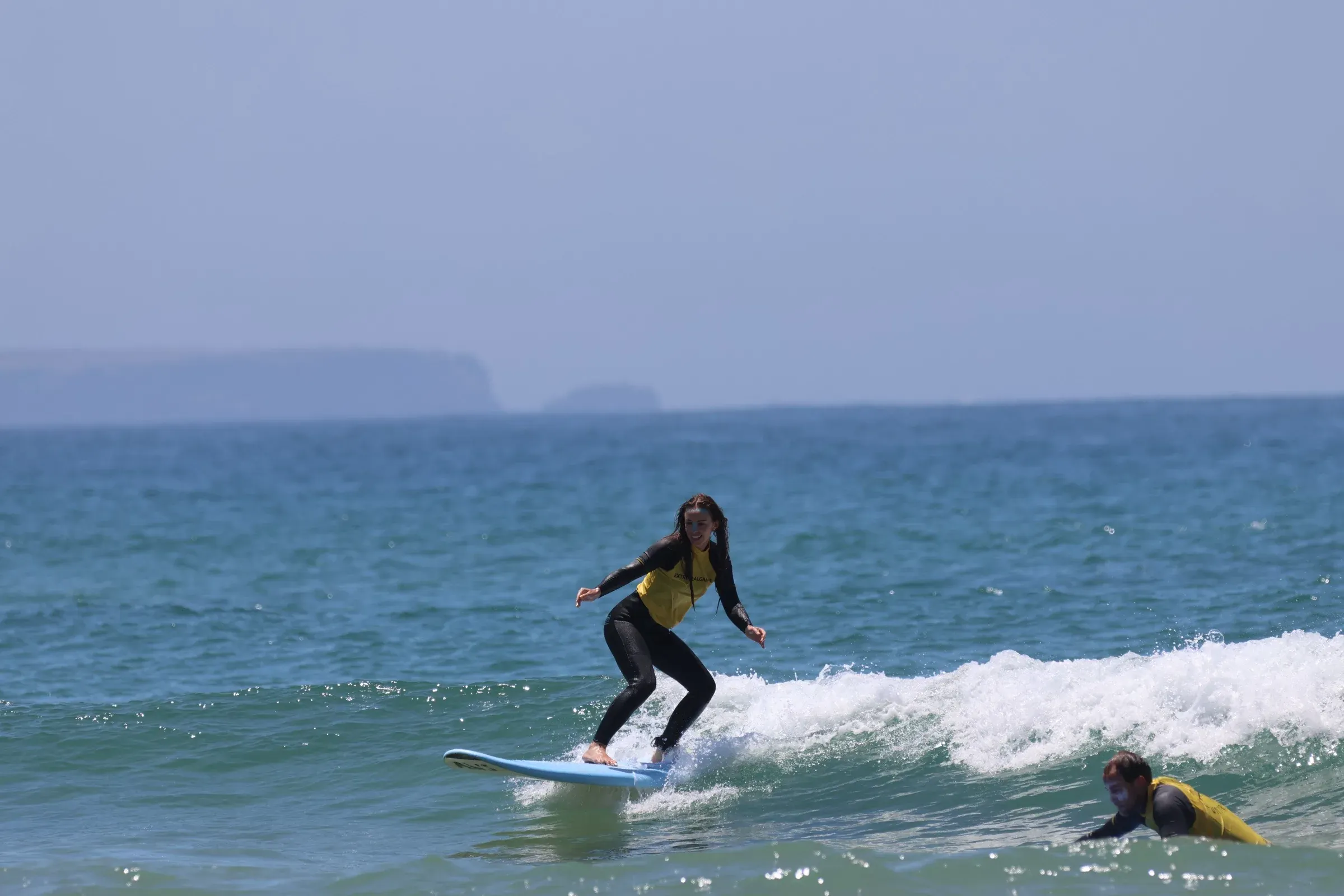
Surfing in Lagos, Algarve
Atlantic swell, 320 sunny days, and a coastline that fits every level. Beginners start on sandy beach breaks five minutes from Lagos. More experienced surfers head further for reef and stronger swell.
All surf activities in Lagos
One session or a full week — there’s a format for every trip.

Surf Camp
A full week, all-in: accommodation, all meals, daily coaching, equipment, yoga, and pool. Seven nights of surfing — nothing left to sort out.
From €780 / week
View Camp
Surf Lessons
Group, semi-private, and private lessons by the day. Max 6 per instructor. IPDJ & ASI certified coaches. All equipment included.
From €65 / day
View Lessons
Advanced Surf Camp
A dedicated week for surfers who already ride green waves. Focused coaching, video analysis, and progressive breaks matched to your level.
Coming soon
Why the Algarve works for surfing
Portugal’s southwestern corner sits right in the path of the Atlantic. Lagos gets the full benefit: warm summers because the south coast is partly sheltered, and consistent winter swells that have crossed thousands of kilometres of open ocean.
The geography helps. The Algarve runs east–west before turning north at Sagres — two distinct coastlines in one region. The west-facing coast takes the full force of North Atlantic groundswells. The south-facing coast catches only the “swell wrap” — waves that bend around the headland and arrive smaller and cleaner. From October through March, groundswells push through roughly 74–90% of the time. Between the two coasts, there’s nearly always somewhere rideable.
Our instructors check conditions every morning and pick the right beach for your group. West coast too big? We head south. Clean conditions? We drive 30–40 minutes to the Vicentina Coast for stronger, more consistent waves. That transfer is built into every lesson — you don’t need a car, local knowledge, or a plan.
The water is warm by Atlantic standards. August tops out around 22°C. In winter it drops to about 15°C — which calls for a 4/3mm — but the Algarve still gets 5–6 hours of sun in January. Surfing here in winter is nothing like surfing in Brittany or Cornwall.
West coast too big? We use the south coast. South coast too small? We head west. The Algarve’s corner geography means there’s nearly always a usable option. No luck involved — just local knowledge and the right coastline for the day.
We’re the only multi-sport camp in Lagos. If the surf drops flat, you can switch to kitesurfing, wingfoil, or SUP the same day at no extra cost. No other camp on this coast works like that.
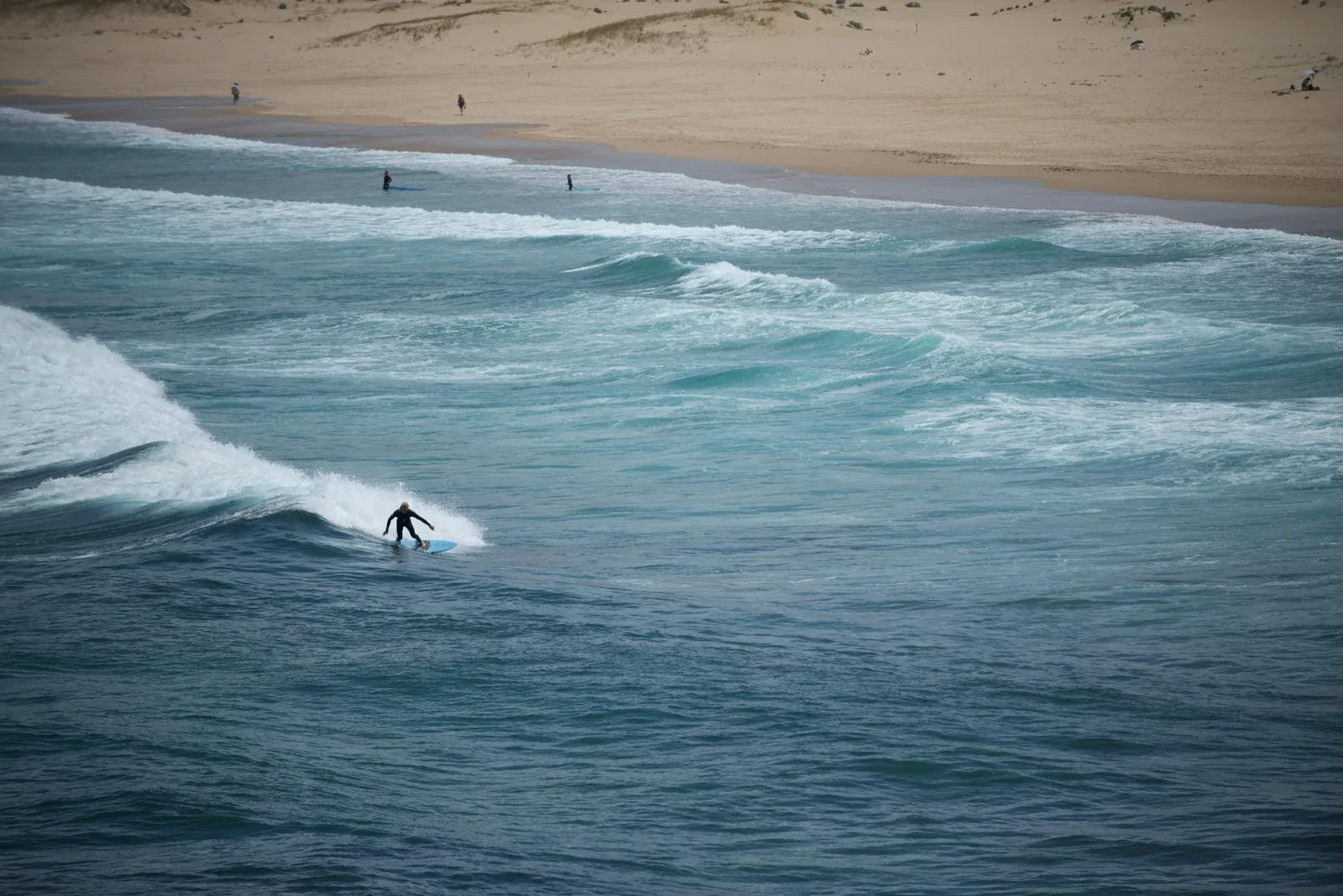
Surf beaches near Lagos in western Algarve
From flat sandy breaks five minutes away to exposed Atlantic swells 50 minutes down the coast.
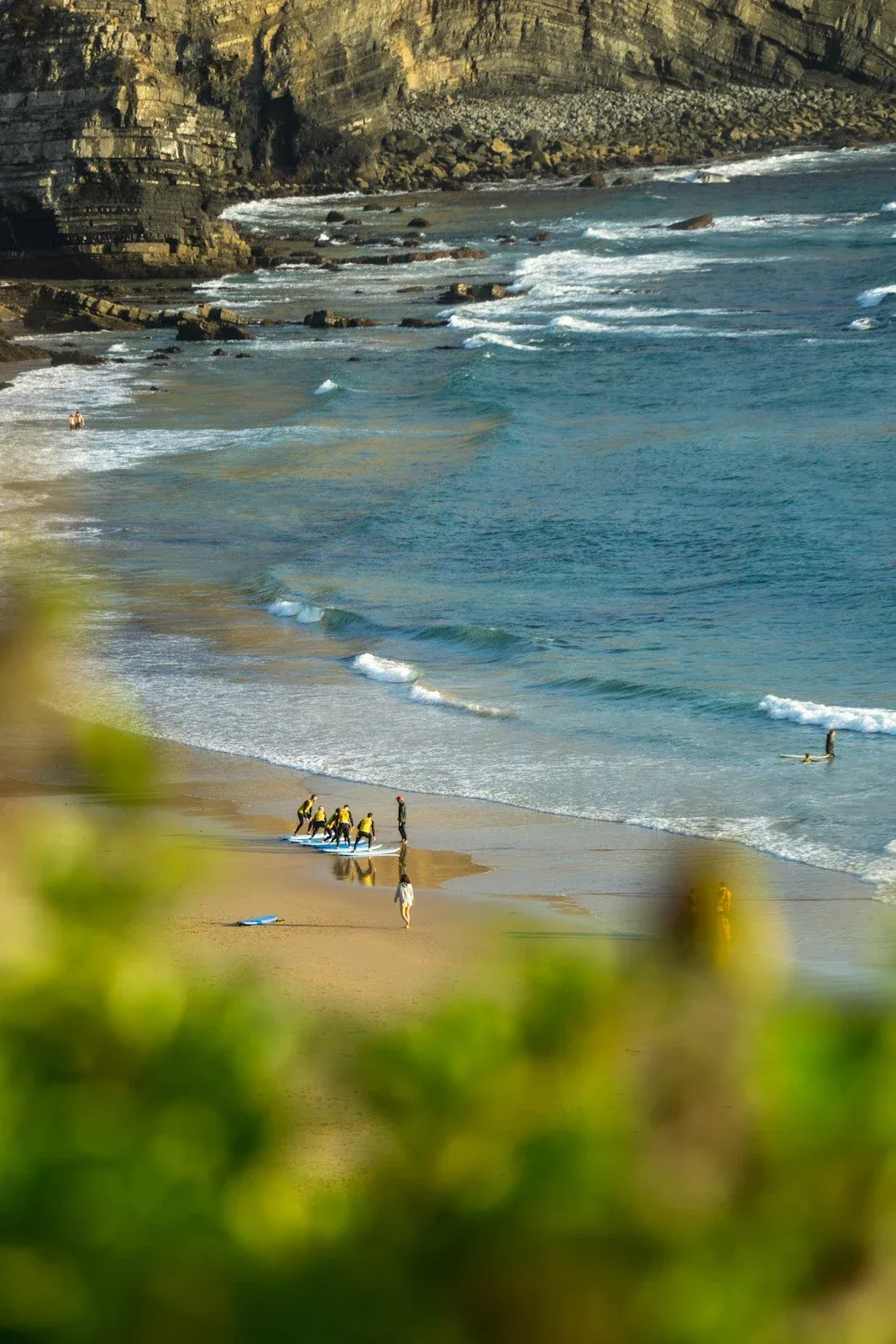
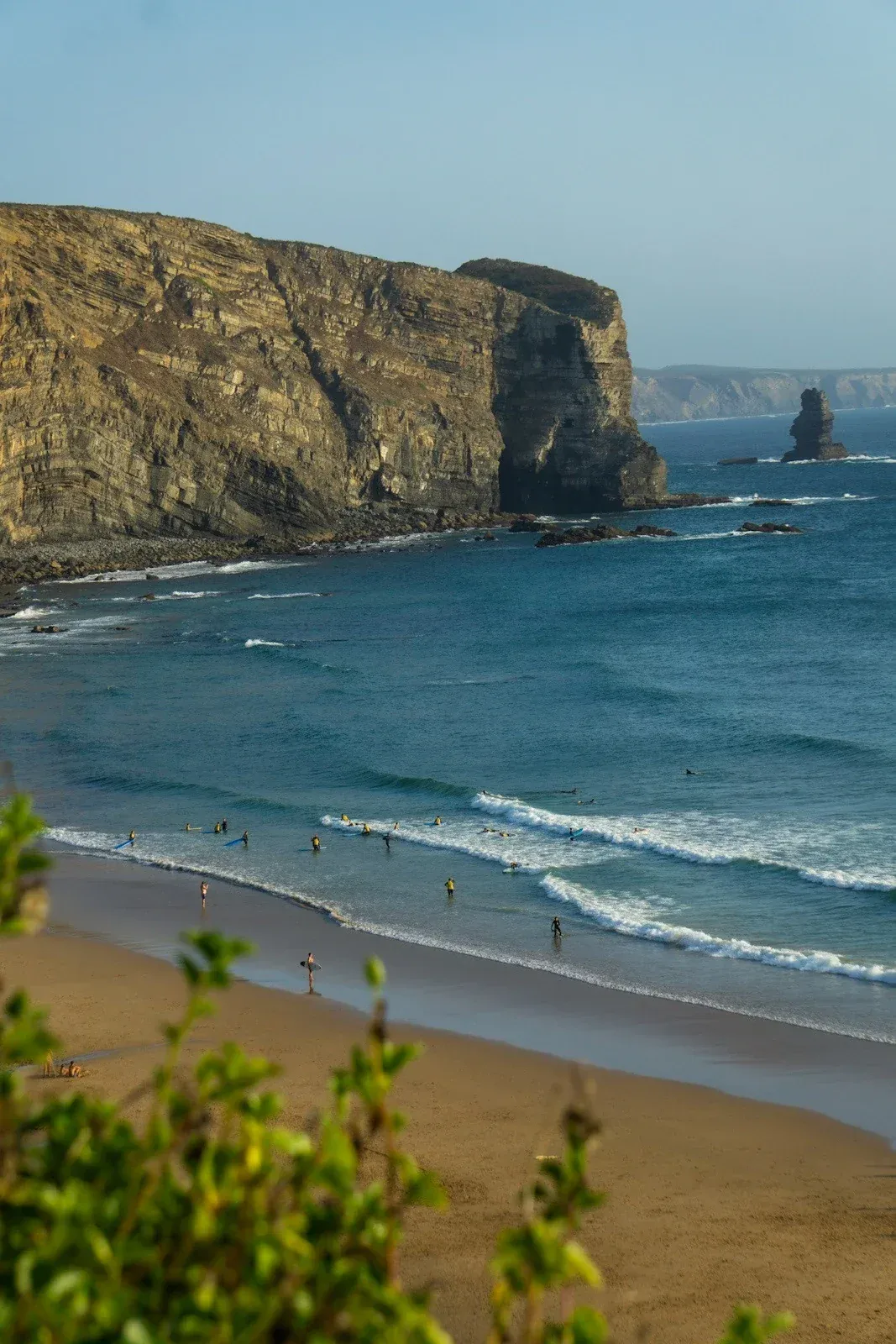
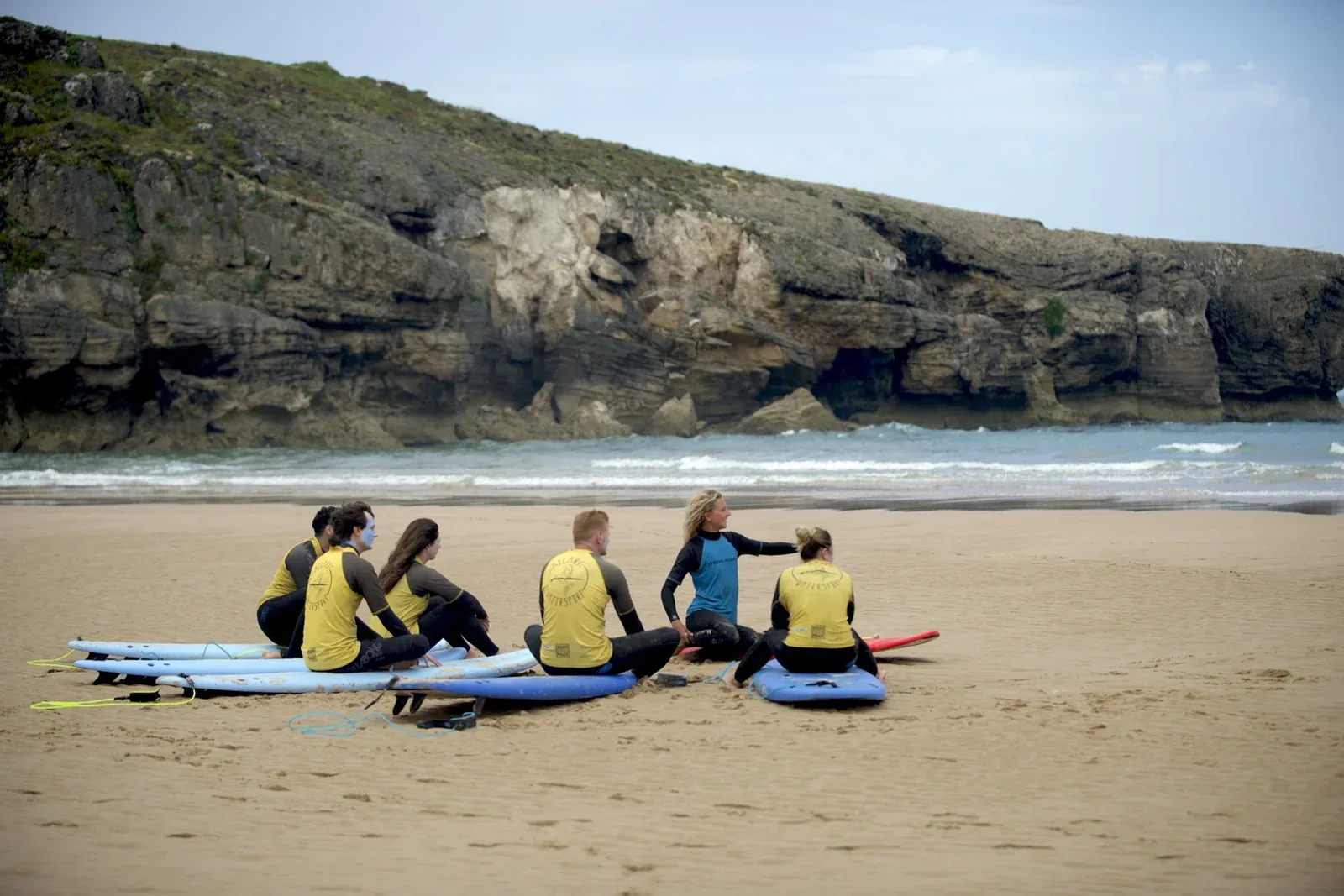
The honest truth about beach selection: Every beach can be good or bad depending on the swell, wind, and tide on a given day. Our instructors check conditions every morning and choose based on what’s actually working — not a fixed rule. On a big winter swell, the “beginner” beaches can be sizeable too. On a flat summer day, even the exposed breaks are gentle. We go where it’s right for your level on that day.
Find your level
Not sure which activity suits your experience? Here’s how we think about it.
Never surfed — or tried once
You start on a large foam board at a gentle beach break. The goal of your first sessions: pop up and ride a wave to shore. Most people are riding whitewater waves by Day 2 or 3.
- Start at Meia Praia or Praia da Luz
- Max 6 students per instructor
- Theory on the beach before every water session
- All equipment included
- Progress to green waves by day 3
You can stand up — now improve
You’ve surfed before, you can catch waves, but the technique has gaps. Maybe the pop-up is slow, turning isn’t happening yet, or you keep falling the same way. Coaching makes the biggest difference at this stage.
- Step up to Monte Clérigo or Praia do Amado
- Technique analysis — real feedback on your surfing
- Turn technique, wave reading, positioning
- Video analysis available on request
- Surf guiding to find the best break for your level
You surf regularly — just want waves
You know what you’re doing. You don’t need a lesson. You need someone to put you on the right break. The Algarve has spots that hold head-high and above, but finding them without local knowledge is a waste of a good day.
- Surf guiding to Amado, Sagres, or Cordoama
- Access to breaks not visible from the road
- Conditions intel from our team every morning
- Combine with other sports on flat days
- Coaching available for any specific focus
Not sure exactly where you fit? Read our full surf level guide →
Surf conditions by month
The Algarve surf season never fully closes — but conditions vary. Here’s what to expect, month by month.
| Period | Water Temp | Typical Swell | Wetsuit | Crowds | Best For |
|---|---|---|---|---|---|
| January – March | 15–16°C | 2–4m+Powerful NW storm swells | 5/4mm or 4/3mm + boots | Very low | Experienced surfers only |
| April – May ★ | 17–18°C | 1–2.5mCleaner, more consistent | 4/3mm | Low | All levels — best shoulder season |
| June – August | 20–22°C | 0.5–1.5mSmaller, consistent beach break | 4/3mm or 3/2mm | High | All levels — easiest learning conditions |
| September – October ★ | 19–21°C | 1–2.5mAutumn swell kicking in | 4/3mm | Medium | All levels — best swell-to-crowd ratio |
| November – December | 16–17°C | 1.5–3m+Atlantic storm season begins | 4/3mm | Very low | Intermediate and advanced surfers |
Best all-round months: April–May and September–October consistently deliver warm water, manageable swell, clean conditions, and beaches that aren’t packed. If your goal is fast progression, these shoulder seasons offer the most sessions and the most variety. For beginners: June–August is excellent. For experienced surfers: January–March delivers the most power.
Wetsuit guide
- Jan–Mar: 5/4mm or 4/3mm + boots — included
- Apr–May: 4/3mm — included
- Jun–Aug: 4/3mm or 3/2mm — included
- Sep–Oct: 4/3mm — included
- Nov–Dec: 4/3mm — included
We always include the wetsuit with every booking. Our honest advice: go slightly thicker than you think you need. Even in summer, an onshore wind can make the water feel much colder than the temperature says — and you surf far better when you’re warm and comfortable. We’d rather you overheat slightly than spend half a session shivering.
Wind patterns
The prevailing wind is northwest. This generates consistent Atlantic swell on west-facing beaches (Arrifana, Amado, Monte Clérigo). The catch: thermal NW winds build through the afternoon, making these same beaches choppier and harder to surf by mid-day. That’s why we always run lessons in the morning, reaching the beach before conditions deteriorate.
When the NW swell is too large for the west coast, south-facing beaches like Meia Praia catch only the “swell wrap” — waves that bend around Sagres, arriving at reduced size and cleaned up by the headland. In summer, occasional south wind pushes south swell directly onto these beaches for long, gentle rides. In winter, NW storm swells can be very powerful — that’s when the south coast becomes the teaching ground and the west coast is for experienced surfers only.
Surf guides and articles
Planning your surf trip? These guides answer what we get asked most.
Surf camp for beginners in Portugal: complete guide
Everything you need to know before your first surf camp. What to expect, how fast you’ll progress, and how to choose the right week for your level.
Read the guide →
Silver surfers: surfing guide in the Algarve
It’s never too late. We’ve had guests in their 60s catching their first waves. This guide covers what to expect, which conditions suit older beginners, and realistic progression.
Read the guide →
5 best beginner surf beaches in the Algarve
A local instructor’s pick of the best beaches for beginner surfers — what makes each one work, and when to go.
Read the guide →
What level surfer am I? The 7-level guide
Our 0–6 level scale explained in plain language. Find your level, understand what coaching you need, and choose the right programme.
Find your level →What surfboard should I ride?
The right board makes a bigger difference than most people realise. Here’s a plain-English guide.
Foam board (foamie)
The soft-top foam board is the fastest way to learn. It’s stable, forgiving, and floats you up so you have time to think about your pop-up. We use 8–9ft foamies for all beginners — don’t be embarrassed about the size. The bigger the board, the more waves you catch. More waves caught = faster progression. Every pro learned on a foamie.
Used for: first 1–5 sessions, all lesson bookings
Longboard or minimal
Once you’re catching green (unbroken) waves and working on your turns, a 7–8ft minimal or longboard lets you keep wave count high while practising technique on a more responsive shape. Still floaty, still forgiving — but it moves more like a proper surfboard. Good for: cross-stepping, nose-riding, and building a smooth style.
Used for: intermediate sessions, surf camp week 2+
Shortboard or fish
Shortboards (5’8–6’4) are high-performance but demand more from you: faster pop-up, precise foot placement, and reading the wave earlier. A fish (wider, flatter, twin-fin) is a more forgiving alternative — great for smaller, mushier conditions like Meia Praia in summer. If you can already turn with control, we’ll help you pick the right shortboard shape for the Algarve’s beach breaks.
Used for: self-surfing, surf guiding sessions
Do you need to bring a board? No. All boards are provided with every surf camp and surf lesson booking. Our quiver covers foamies, funboards, longboards, and shortboards — your instructor will pick the right one for your level and the day’s conditions. If you’re travelling with your own board, bring it — our guides will put you on the right wave for your setup. For solo surfing without a lesson, you can rent a board directly from us or from any of the surf shops in Lagos town centre.
Frequently asked questions
Everything we get asked about surfing in Lagos — answered honestly.
No experience needed. The Algarve has beaches for every level. Absolute beginners start on the sandy beach break at Meia Praia — 5 minutes from Lagos — on large foam boards with experienced coaches. As you progress, beaches like Arrifana and Monte Clérigo offer more consistent waves and longer rides. Advanced surfers can access exposed reef and point breaks along the Vicentina Coast. Our team matches you to the right beach for your level on the day — conditions always play a part too.
September and October offer the best combination — consistent Atlantic swell (1–2.5 metres), warm water (19–21°C), and fewer crowds than August. April and May are also excellent: swell is building, water is warming to 17–18°C, and beaches are quiet. Summer (June–August) has smaller, cleaner waves ideal for beginners, plus the warmest water. We run surf courses year-round, with lessons available even in January on suitable days.
The Atlantic off Lagos ranges from 15°C in February–March to 22°C in August. We provide all wetsuits — you never need to bring your own. Our approach: we err on the side of warmer. April–May and September–October we use 4/3mm. June–August we use 4/3mm or 3/2mm depending on the day — even in summer, wind on the water makes it feel colder than the thermometer suggests. January–March is 5/4mm or 4/3mm plus boots. You surf better when you’re warm and comfortable.
Most beginners stand up on their first 2-hour lesson. After 3–5 sessions you can catch and ride green (unbroken) waves independently. A full week of surf camp — 5–6 sessions — typically takes you from standing up on whitewater to trimming along the face of green waves with control. Progress depends on conditions, your natural balance, and how consistently you get in the water. Daily coaching with the same instructor accelerates this significantly compared to isolated one-off sessions.
Yes — Meia Praia and Porto de Mós have gentle rolling waves ideal for children aged 7 and up. Our instructors run tailored children’s lessons with small groups and age-appropriate progressions. Many families book surf camp together: parents take group sessions while children have their own dedicated coaching. We’ve run family surf weeks for over a decade.
Yes — and this is what makes Algarve Watersport different. We offer 6 water sports: surf, kitesurf, wingfoil, windsurf, wakeboard, and SUP. Surf camp guests can switch sports any day at no extra cost. If the surf is flat or blown out, you try kitesurfing. If you want a rest from surfing, there’s SUP or wakeboarding. No other camp in Lagos offers this flexibility.
Surf guiding means a local expert takes you to the best waves of the day. The Algarve has dozens of breaks spread over 80+ kilometres of coastline. The right spot depends on swell direction, wind, tide, and your level. Without local knowledge you might drive 45 minutes to a beach that’s blown out. A guide handles logistics, reads conditions in real time, and ensures every session is at the optimal break. Beginners don’t need separate guiding — we handle beach selection for all lesson bookings. Guiding is most valuable for intermediate and advanced surfers who want to self-surf.
Monte Clérigo, 35 minutes from Lagos, is our top recommendation for intermediate surfers — more exposed than the sheltered bays, it picks up more swell and delivers steeper, punchier faces where you can really work on turns. Arrifana (30 minutes) is a good transition from beginner beaches — more consistent and less crowded than Meia Praia, with long forgiving right-handers. For experienced intermediates ready for a challenge, Praia do Amado starts delivering. The honest answer: the right break depends on the swell on the day. Our guides read conditions every morning and take you to whatever’s working.
It depends on your level. For beginners: summer is better — warmer water, smaller waves, long days, social atmosphere. For experienced surfers: autumn through spring is better — stronger Atlantic swells, cleaner conditions, no crowds, lower prices. The sweet spot for most visitors is May–June or September–October, when conditions are excellent and beaches are not yet (or no longer) at peak summer capacity. We’re honest: August produces the most bookings but not the best waves.
Ready to surf the Algarve?
15 years in Lagos, 1,300+ reviews, and a surf programme flexible enough to fit any trip. Pick your format and get in the water.
All equipment included · Max 6 per instructor · IPDJ & ASI certified · Cancel anytime