
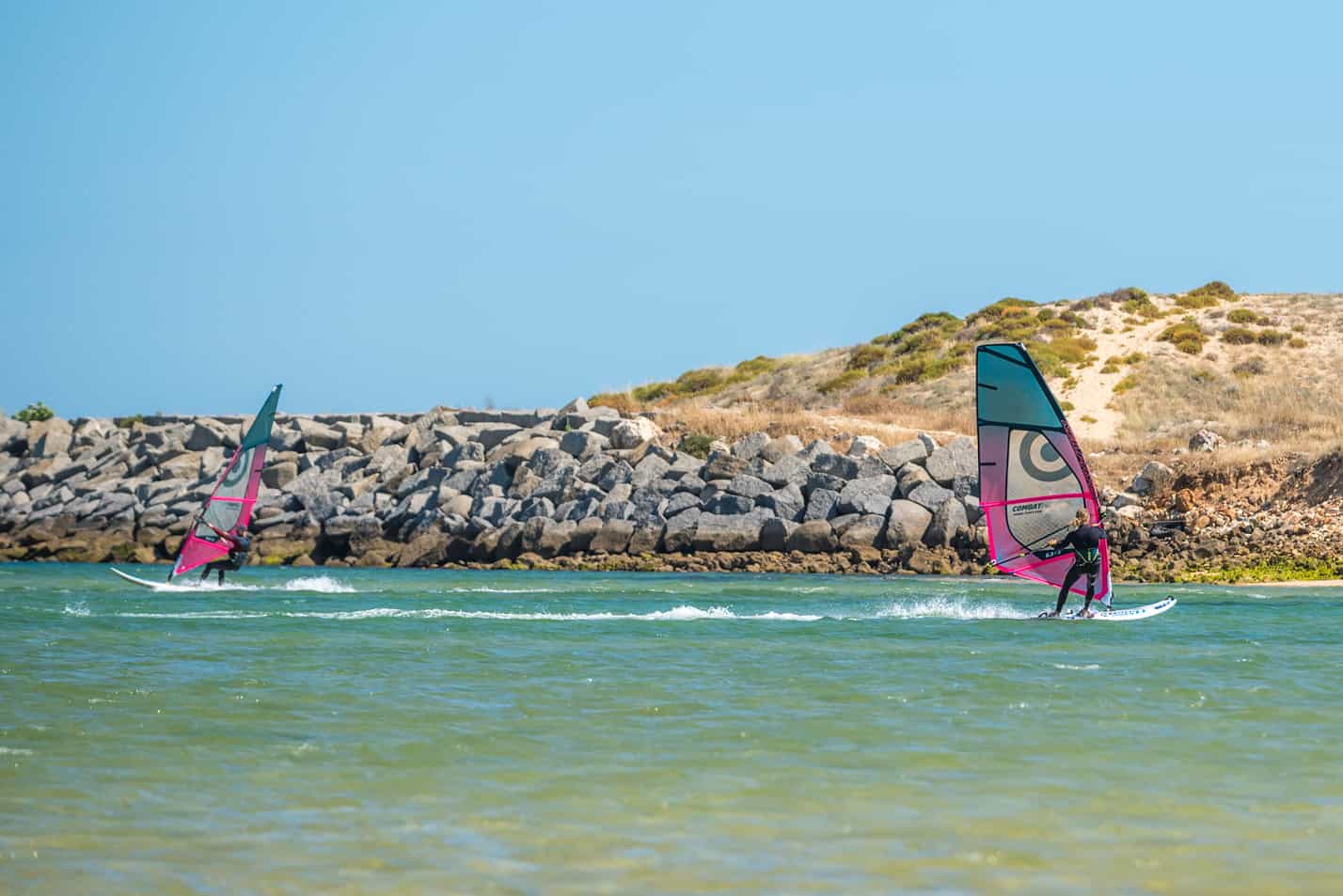
Windsurf in Portugal
Windsurfing combines a surfboard with a sail — you stand on the board and use the wind to propel yourself across the water. It’s one of the most complete water sports: physical, technical, and endlessly progressive. The Algarve’s thermal winds and flat lagoons make it one of Europe’s best places to learn.
Why the Algarve works for windsurfing
The Algarve’s thermal wind is the reason windsurfers keep coming back. The Nortada — a northerly thermal driven by the temperature difference between the hot Alentejo plains inland and the cooler Atlantic coast — arrives each afternoon with remarkable consistency. On a typical summer day, the morning is calm. Around 1:00–2:00 PM, the wind switches north and ramps up to 15–25 knots within an hour. It stays on through the afternoon and eases at sunset.
What makes it ideal for learning is not just the strength — it’s the predictability. You know when the wind comes. You plan your morning accordingly. By the time you rig, the conditions are ready. This pattern repeats, day after day, from April through October. Most other European windsurf destinations have good days and bad days. The Algarve has good afternoons, almost every day.
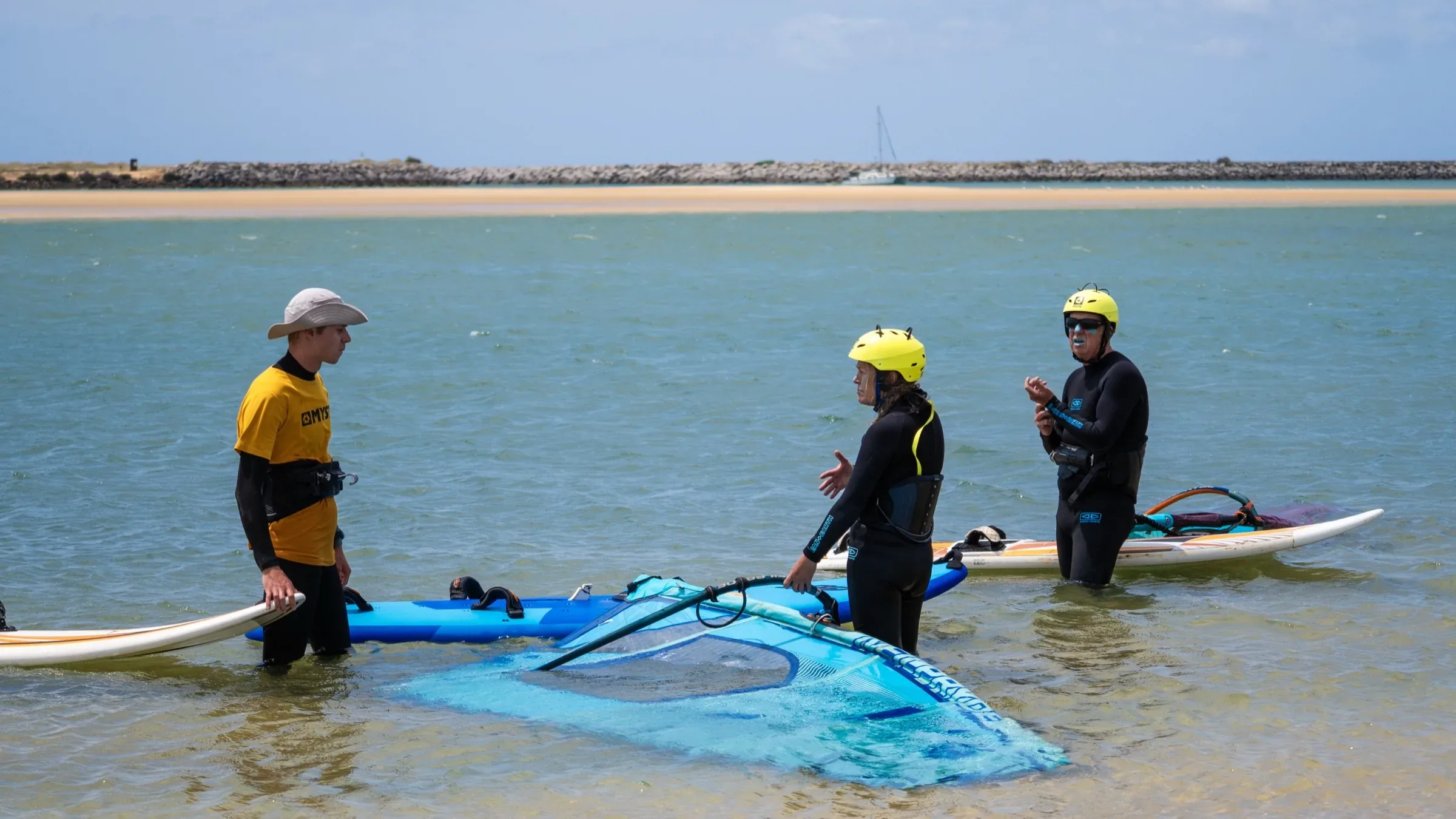
The teaching location is Alvor Lagoon — a tidal inlet between Lagos and Alvor, 15 minutes by van from the Kitehouse. The lagoon is protected from Atlantic swell. Flat water, sandy floor, shallow enough to stand throughout the session. No chop, no current, no ocean confusion. Beginners can focus entirely on the technique of sail control and board balance without battling unpredictable water. For progression, it’s one of the best environments in southern Europe.
Wind doesn’t blow every day — especially in April, September, and October. AWS runs six water sports from one base: windsurfing, kitesurfing, surfing, wing foiling, wakeboarding, and SUP. If there’s no wind, you surf or wakeboard. No session credit is lost. No week is a write-off.
AWS has been teaching on Alvor Lagoon since 2006. The instructors know every tidal window, every wind angle, and how to use the lagoon to match each student’s pace. That depth of local knowledge is something a new school simply cannot replicate.
Windsurfing in Algarve
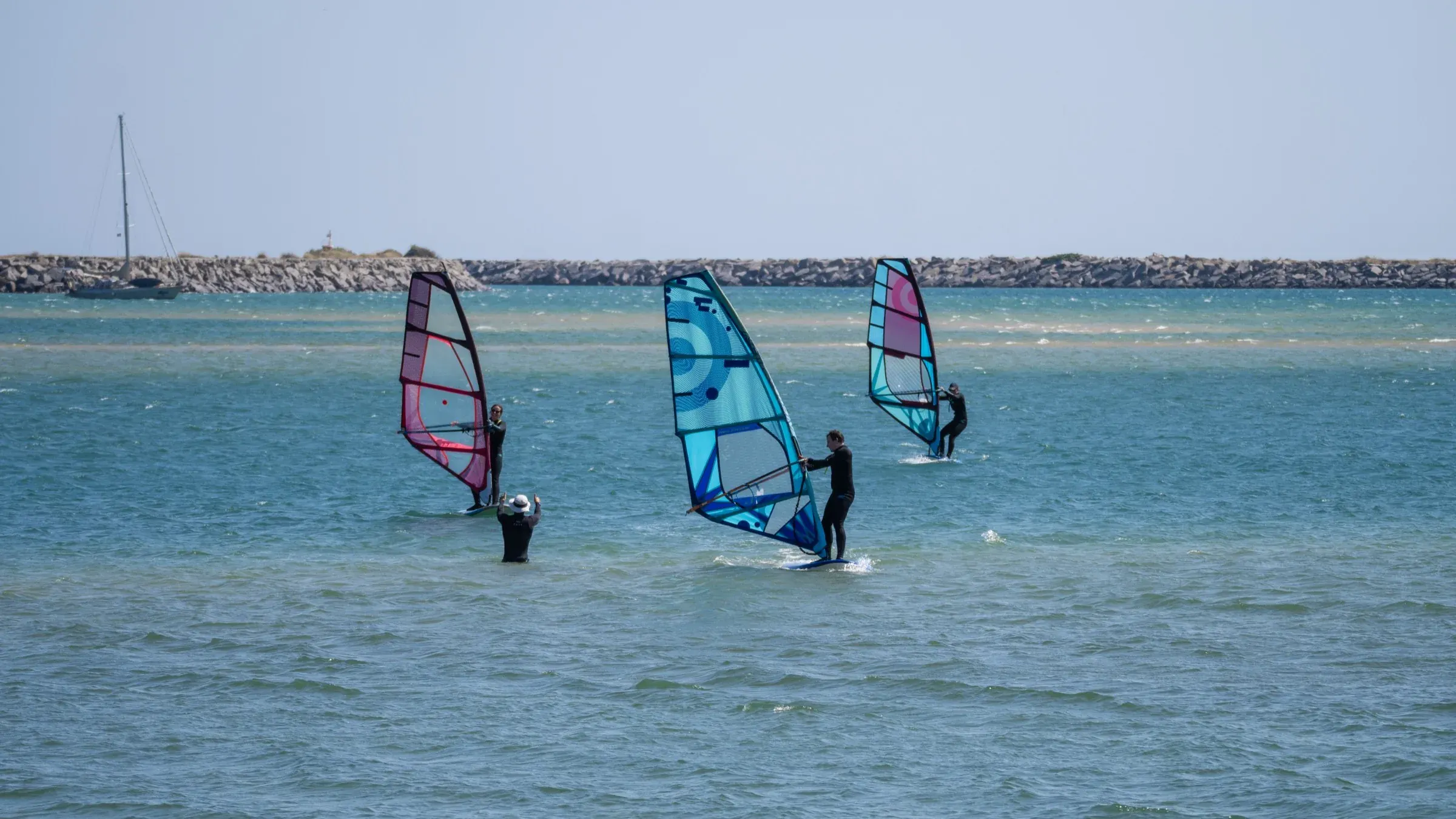
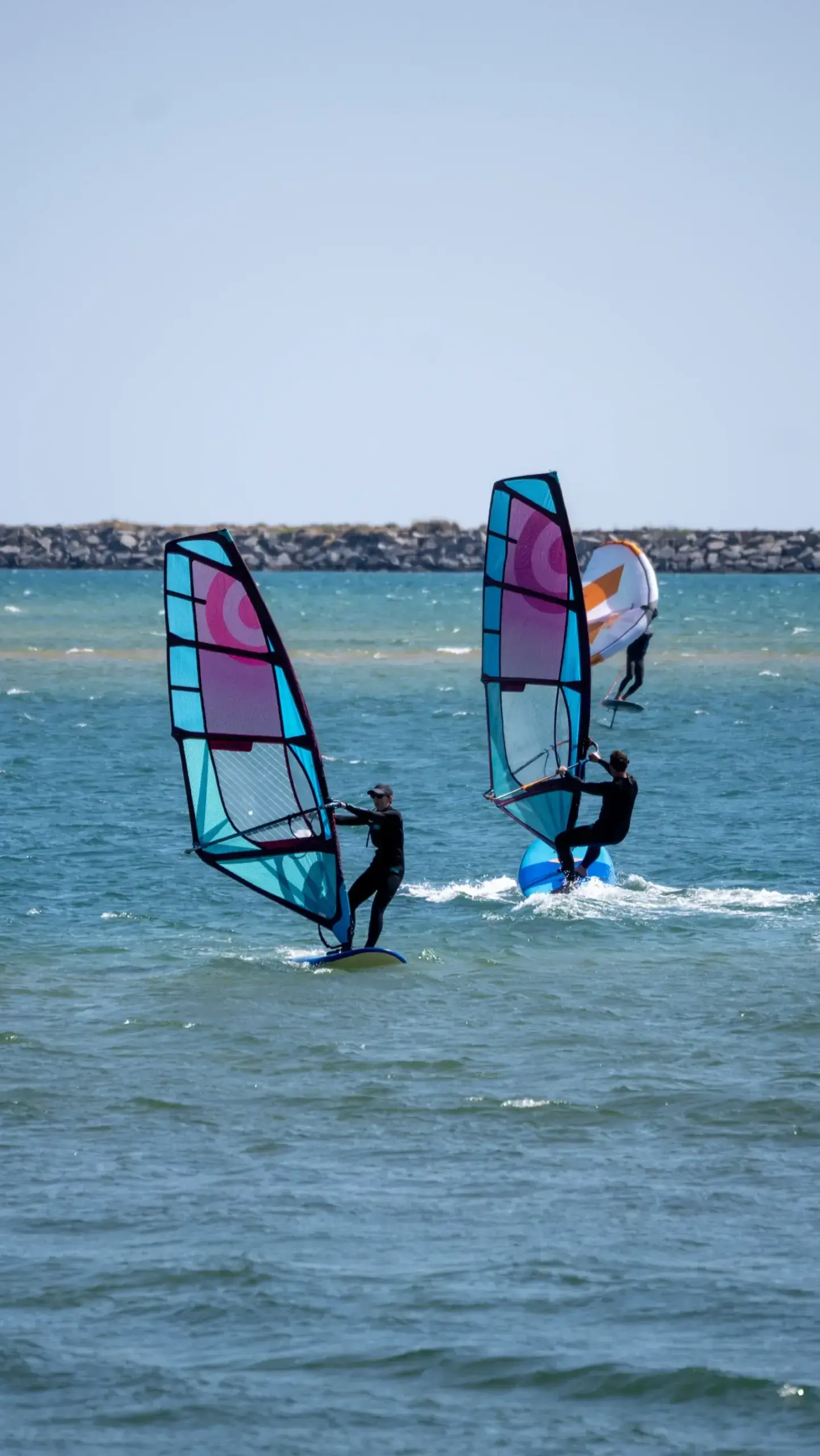
Windsurfing is the combination of a surfboard and a sail. You stand on the board, hold the boom, and use the wind’s power to move across the water. Lean the sail to steer, shift your weight to control speed, and — over time — unlock the full spectrum of what the sport offers.
The Algarve is one of Europe’s most consistent windsurfing destinations. Thermal winds kick in reliably from May onwards, Alvor Lagoon offers flat-water learning conditions, and the water is warm from June through October. You can complete a full beginner progression in a single week.
Freeride
The most popular style — cruising at speed, carving, and enjoying the sensation of pure sailing. No tricks required, no competition pressure. Just you, the wind, and open water. Freeride is where most people spend 90% of their windsurf life, and it’s endlessly rewarding.
Freestyle
Tricks, rotations, and aerial moves. Freestyle windsurfing is the discipline of expression — sliding the board sideways, popping into the air, chaining moves together in a flow. Harder to learn, addictive once you start. Requires strong fundamentals first.
Wave Riding
Ocean swell combined with wind power — riding waves on a windsurf board is one of the most exhilarating experiences in water sports. The Algarve’s Atlantic coastline provides the raw material; the Meia Praia spot is where you’ll start practising on small swell.
Racing & Slalom
Pure speed. Slalom windsurf gear is built for maximising velocity — thin boards, large fins, high-aspect-ratio sails. Racers reach speeds exceeding 40 knots in competition. Not a beginner pursuit, but a compelling direction for those who want a performance target to aim at.
Windsurf Spots in Lagos
Alvor Lagoon
The Algarve’s premier windsurf learning spot — flat water, consistent thermal winds, and a shallow sandy bottom. The lagoon is protected from open-ocean swell, making it safe and predictable for all levels. Winds typically build from mid-morning and peak in the early afternoon.
Alvor is where AWS runs all beginner and most intermediate sessions. The shallow entry point makes it easy to rig on the beach and walk into the water, and the flat conditions let you focus entirely on technique without battling waves or current.
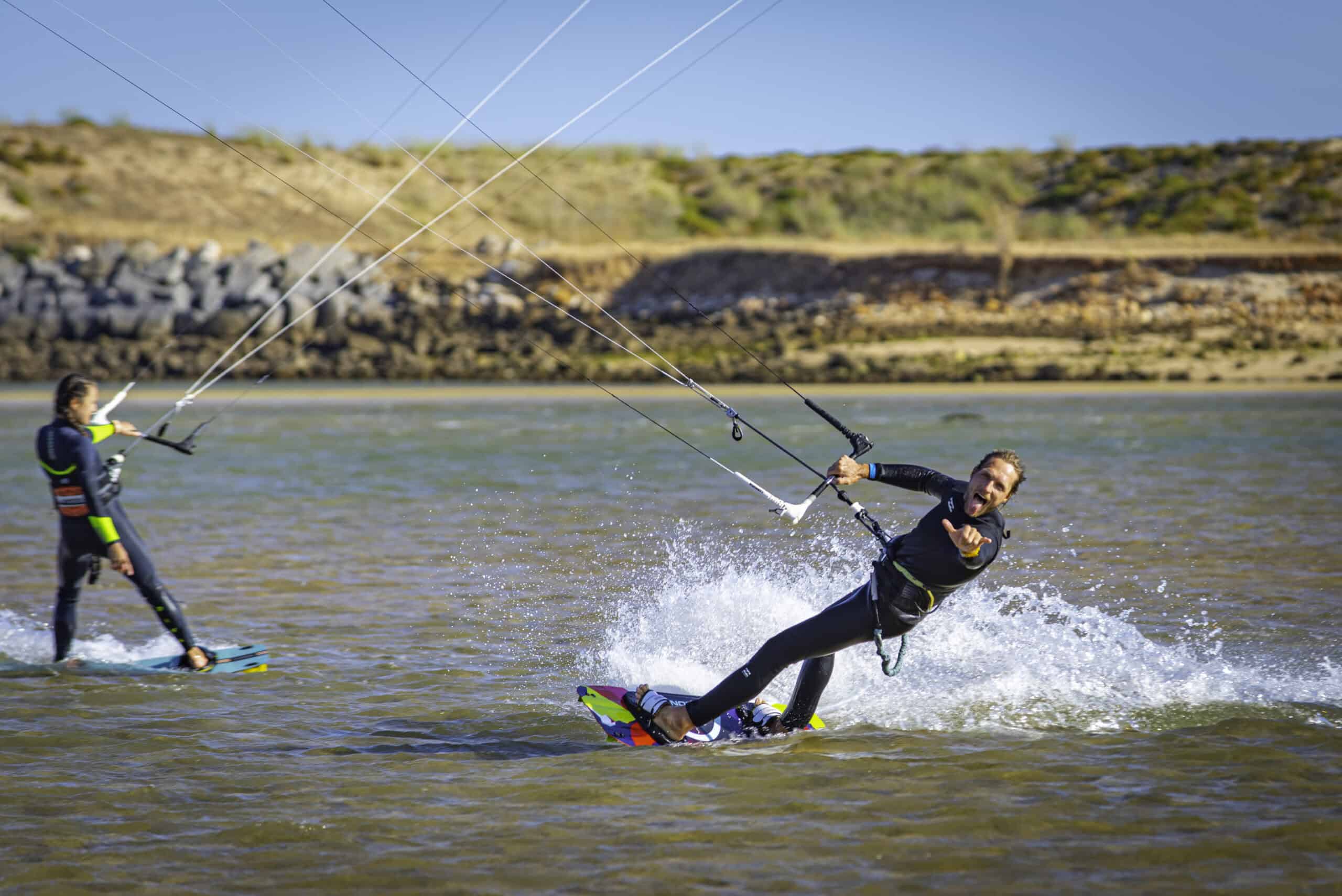
Meia Praia
A 4km stretch of open Atlantic beach, 5 minutes from the Kitehouse. Meia Praia is where AWS runs kitesurfing and wing foiling sessions — open ocean conditions with sea breeze, occasional swell, and radio communication between instructor and student. A safety boat is available for pick-up.
Windsurf lessons do not take place at Meia Praia. All windsurf teaching runs exclusively at Alvor Lagoon, where flat water and stable thermal wind give the best conditions for learning and progression. Some independent windsurfers do use Meia Praia recreationally, but note that summer beach regulations restrict watersport zones at certain sections of the beach.
What’s Your Level?
Never tried it
You’ve never stood on a windsurf board, or you’ve tried once and need a proper foundation. The beginner programme on Alvor Lagoon takes you from zero to sailing upwind confidently — usually in 3–5 days.
Beginner CampCan sail, but stuck
You can water-start and tack but gybes are messy and harness sailing still feels uncomfortable. The intermediate programme focuses exactly on these skills — with targeted drills and instructor feedback to break through.
Intermediate CampSolid sailor, looking for challenges
Comfortable with harness, gybes, and varied conditions? Ask our instructors about advanced and freestyle options. We can design a programme around your specific goals — wave riding, slalom technique, or aerial moves.
WhatsApp UsBest Time to Windsurf in Lagos
| Month | Wind Reliability | Water Temp | Air Temp | Crowds | Price |
|---|---|---|---|---|---|
| April | Good | 17°C | 18°C | Low | Low |
| May | Very good | 18°C | 21°C | Low | Low |
| June | Excellent | 20°C | 24°C | Medium | High |
| July | Excellent | 22°C | 27°C | High | Peak |
| August | Very good | 23°C | 28°C | Peak | Peak |
| September | Very good | 22°C | 24°C | Medium | High |
| October | Good | 20°C | 20°C | Low | Low |
VDWS certification — what it means and why it matters
All our windsurf instructors hold VDWS (Verband Deutscher Windsurfschulen) certification — the German windsurfing teaching standard recognised across Europe and beyond. It means every lesson follows a structured progression, not just time on the water.
The VDWS system runs seven levels, from complete beginner through to advanced freestyle and wave sailing. When you train with us, your instructor tracks where you are in that system, so if you continue lessons at home or elsewhere in Europe, the handover is seamless.
Why VDWS and not IKO or BPSA? Because VDWS is the gold standard for windsurf teaching in continental Europe, and Portugal’s Algarve draws a large German and northern European clientele who know exactly what the badge means.
Complete Level 1 with us and you’ll receive your VDWS starter card — proof of competency that’s accepted at rental centres across Portugal, Spain, Greece, and Germany. No need to start from scratch next time.
VDWS standards require small groups. Our lessons run a maximum of 6 students per instructor on the water, so you get coaching corrections, not just supervision.
| Level | Description |
|---|---|
| 1 | First steps — uphauling, basic steering, beach start |
| 2 | Water start, harness use, basic carving |
| 3 | Carve gybes, foot straps, planing in light wind |
| 4 | Planing in stronger wind, fast tacks, power control |
| 5 | Freestyle basics — flaka entry, push tack |
| 6 | Wave riding — bottom turns, top turns, wave selection |
| 6+ | Advanced freestyle and wave sailing combinations |
| — | Theory module: weather, safety, equipment care |
Most beginners complete Levels 1–2 in a 5-day camp. Levels 3–4 are achievable with 10–15 hours on the water over two visits.